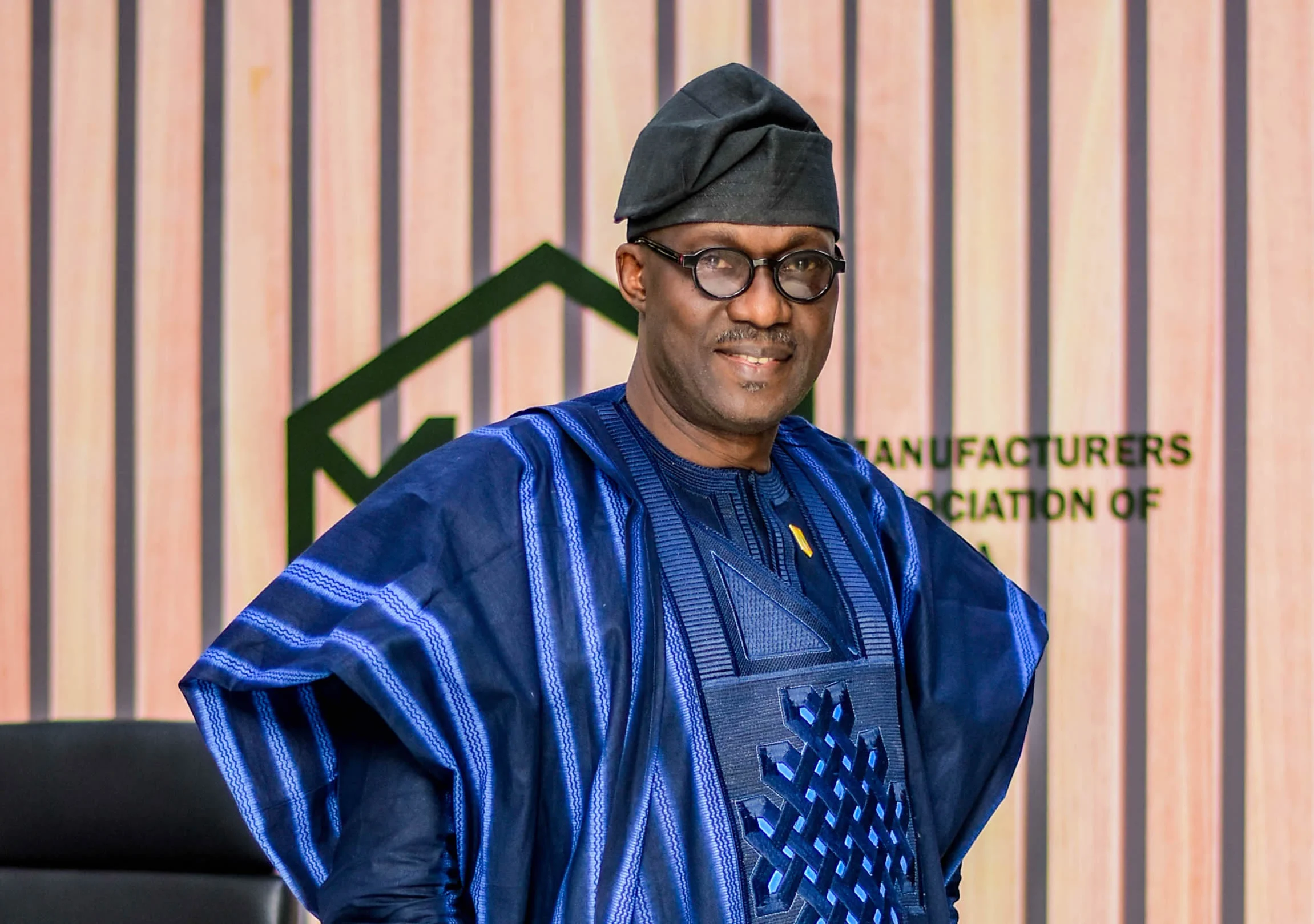
Manufacturers have called on commercial banks to reflect the reduced Monetary Policy Rate in their lending rates, as they welcomed the Central Bank of Nigeria’s decision to cut the benchmark rate to 23 per cent.
They described the rate cut as a signal that the apex bank is listening to the real sector. For months, manufacturers have called for reduced interest rates.
The Monetary Policy Committee of the CBN cut the MPR to 23 per cent from 26.5 per cent on Tuesday at the end of its 307th meeting in Abuja. The committee had held rates at its two previous meetings, following a 50-basis-point cut it announced in February 2026.
In separate phone interviews with the Punch, productive sector leaders, including the Director-General of the Manufacturers Association of Nigeria, Segun Ajayi-Kadir, said manufacturers would be looking forward to reduced lending costs at the banks.
He said, “The decision of the MPC to cut MPR to 23 per cent is a commendable step in the right direction, but we seek an intentional transition to lending rates.”
Ajayi-Kadir said the MAN commended the CBN’s Monetary Policy Committee for its “long-awaited decision” to reduce the rate, describing it as a clear signal that the apex bank was responsive to the dynamism of the business environment.
He, however, said the real issue for manufacturers was not the MPR but the interest rate they paid when they borrowed from banks.
“Even at 23 per cent MPR, the prime lending rate will still be 27-30 per cent. No manufacturer anywhere in the world can be competitive borrowing at 30 per cent,” Ajayi-Kadir noted.
MAN DG described the 23 per cent rate as “a welcome relief, not yet a stimulus.”
He pointed out that manufacturers in Egypt, Morocco and South Africa borrowed at between eight and 12 per cent, and said the CBN must address the transmission of rate cuts to lending rates, as bank lending rates had stayed high through the last three MPC cuts.
MAN urged the CBN to continue easing towards a sub-15 per cent MPR in the medium term while the government tackled power, forex, logistics and multiple taxation. Ajayi-Kadir said it added more than 40 per cent to the cost of production.
“We cannot have disinflation on paper and high cost of credit in the factory,” he remarked.
The group also called on the CBN to reduce the Cash Reserve Ratio from 45 per cent, operationalise the N1trn Manufacturing Stabilisation Fund at nine per cent, create a special single-digit lending window for manufacturers, and facilitate a five per cent development finance rate for small and medium enterprises.
Similarly, National Vice President of the National Association of Small-Scale Industrialists, Segun Kuti-George, described the rate cut as good news for manufacturers.
“It is good news. Any reduction in interest rates is good news for the industrialists, okay, or for manufacturers, as the case may be,” Kuti-George said.
He said cheaper borrowing would allow manufacturers to finance inventories and equipment more easily, which could expand the industrial base and drive economic growth, though he warned that inflation could rise as more money circulated in the economy.
Kuti-George said Nigeria remained the second-highest interest rate nation in Africa, and compared the country unfavourably with Ghana and Benin Republic.
“In Ghana, in Benin Republic, in some nations like that, they borrow at 11 per cent, at 12 per cent, even at 6 per cent. And that’s the kind of thing that can drive industrialisation, not high interest rates,” he said.








