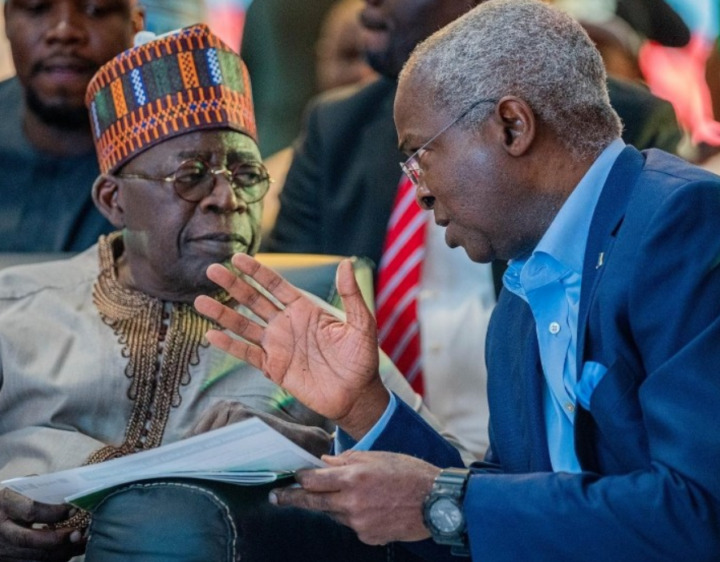
Lawyer, Eyimofe Atake (SAN), and the Tolugbogwa of Warri Kingdom, speaks with NAOMI CHIMA about balancing his roles as a lawyer and chief
You became a Senior Advocate of Nigeria at just 41. What did that achievement teach you about excellence?
It taught me that excellence is not an event but a habit, practised daily until it becomes character. I spent a formative year in the chambers of Chief G.O.K. Ajayi, SAN, and founded Eyimofe Atake & Co. in 1988. The Silk came in 1999, after less than 12 years in active practice, having first gone from the Nigerian Law School to the University of Cambridge for a doctorate in law.
There was a certain symmetry to it: I took Silk at 41, the very age at which my father was elevated to the High Court Bench in 1967.
Nobody becomes a senior advocate on the day of the announcement. You become one through years of often-unwitnessed labour, and the rank merely certifies what the work has already made of you.
What is the most important quality you think a SAN should possess, and how do you embody it?
Integrity, and I say that deliberately ahead of brilliance, because brilliance without integrity is a weapon, while brilliance governed by integrity is an institution.
The rank of senior advocate is, at its core, a certificate of trust. The courts must be able to rely absolutely on what you tell them, and clients must know that your advice serves their interests and the law, never merely your fee.
As for resilience, a little history will explain it. In my time, the rank was ferociously contested. We were widely considered too young, and only 12 senior advocates were appointed in my set, so the competition was keen and severe. It was not unusual to have to apply more than once.
Even after our conferment, a petition was sent by a SAN to the Chief Justice of Nigeria contending that we were too young, and my name was specifically mentioned in it. The then Chief Justice replied to the letter, copying Chief F.R.A. Williams, SAN, the Chairman of the Body of Senior Advocates of Nigeria. He stated that we met all the criteria, had appeared repeatedly in the courts, particularly the Supreme Court, and that the Legal Practitioners Act nowhere disqualified a candidate on the grounds of age. He also noted that we had come highly recommended by the justices of the Supreme Court themselves.
It was a masterly application of the law and the criteria, and I still keep copies of that petition and the Chief Justice’s response in my archives to this day.
So, you can understand the kind of barrier that stood before us. My earlier attempts taught me something that eventual success could not have: the profession owes you nothing, and disappointment is simply instruction wearing an unfriendly face.
I went back, strengthened the record and tried again. The answer to a setback is better work, not bitterness.
What is the most memorable moment in your legal career?
There are several, but three stand above the rest, and it is no accident that one of them was my father’s case.
The first came in 2009, when I persuaded a Nigerian court, in a matter involving two vital witnesses in America who were elderly, gravely ill with cancer and unable to travel, to move to the United States to take their evidence.
Let me be precise about how it was done: it was done strictly within the law. As a student of international law, I argued that the jurisdiction of the Federal High Court, as the law then stood, ran throughout Nigeria, and that, in law, the premises of the Nigerian Embassy in Washington and our Consulate in New York were Nigeria. I submitted that if the proceedings were conducted within those premises, the court would still be sitting in Nigeria.
The judge was not persuaded at the beginning, but as the advocacy progressed, she became convinced, particularly because the interest of justice demanded that the evidence of dying witnesses, which was vital to putting my case to bed, be preserved.
The matter was contested all the way to the Supreme Court, and we won. To my knowledge, it remains without precedent.
The second was the case of The Vessel Saint Roland v Adefemi Osinloye, decided by the Supreme Court on April 21, 1997, and reported in Part 500 of the Nigerian Weekly Law Reports, where I led my brother, Adewale, for the shipowners.
The plaintiff had arrested our clients’ vessel over a missing Peugeot 505 saloon car. To secure her release, our chambers handed his counsel a bank draft for N200,000, held in trust as security under a written agreement between counsel, to be returned against a bank guarantee in the same sum.
The guarantee was duly delivered and rejected. The draft was cashed. When the car itself was found and discharged at Apapa, ready for collection, the plaintiff’s answer the next day was to file a notice of discontinuance and keep our client’s money.
The law report itself preserves the temperature of that day. The leading judgment recorded that I submitted, in a clear, emotional and passionate address and with considerable force, that the conduct in the entire issue bordered on fraud.
I plead guilty to the emotion. An advocate who is not moved by injustice should not expect the court to be.
I urged the Supreme Court to adopt a principle our courts had never before pronounced: that a notice of discontinuance, though validly filed without leave, could itself amount to an abuse of the process of the court where the plaintiff had used the machinery of the court to gain a substantial advantage to the detriment of the defendant. I argued that the court could set such a notice aside or allow it to take effect only on terms.
The court agreed unanimously. It pronounced the discontinuance in that case a definite abuse of process, affirmed the inherent power of the court to prevent a litigant from retaining a collateral advantage obtained through its process even after discontinuance, and ordered that the money be refunded within seven days.
Discontinuance, in other words, is not an escape hatch. A plaintiff cannot ride the process of the court to advantage and then dismount when the reckoning comes.
It was the first time that principle was laid down in Nigerian law, and every defendant who has faced a hit-and-run plaintiff since then has that decision to lean upon.
The third was Justice F.O.M. Atake v Chief Nelson Asigboro Afejuku (1994), my father’s case, and the first time I appeared as a junior before a full court of seven justices of the Supreme Court. That was a rarity in the military era, when constitutional cases were few.
My father, a retired judge, had commenced a prosecution for criminal libel over defamatory publications against him and appeared in person. The trial judge raised, suo motu, the constitutional question of whether a judicial officer who had ceased to hold office could appear for himself. The judge declined to hear him further, ruled against him and struck out the case.
My father whispered to me in court to take over, and I did, through the Court of Appeal, which agreed to refer the constitutional question to the Supreme Court.
The court stood down the case of the great Chief F.R.A. Williams, SAN, to hear our constitutional point, so that the giant of the Bar sat watching as I argued.
The decision was unanimous in our favour: a judicial officer who has ceased to hold office may appear for himself in person.
Walking out of that full court in the early 1990s, I knew that Silk was possible, and a few years later, I began to apply.
There is also a family grace note that binds those two Supreme Court appearances. On both occasions, I led my brother, Adewale, who was then a junior in my own chambers. The Silk came to me in 1999 and to Adewale in 2018.
I count it among my quiet satisfactions that the cases two brothers fought side by side eventually ripened into two senior advocates in one household, with the second forged in the chambers of the first.
As for losses, the ones that linger are never about me. They are the cases in which I remain convinced the law was on our side and the decision went the other way. A lawyer who has stopped being troubled by those has stopped believing in the law, and I have not.
What can be done to improve Nigerians’ belief and acceptance of the justice system?
Give the ordinary Nigerian three experiences, and belief will follow: speed, consistency and enforcement.
A system in which a simple dispute can outlive the disputants forfeits the confidence of the people it serves.
Consistency means that cases are decided alike, so that citizens can plan their lives around the law.
Enforcement means that a judgment is not a suggestion. Court orders must bind the powerful exactly as they bind the powerless, and government itself must be the most obedient litigant in the land.
Faith in justice is built one honest, prompt and enforced decision at a time.
If you could reform three things in Nigeria’s judiciary, what would they be?
First, time: strict, enforced case-management timelines at every level and a decisive curbing of the abuse of interlocutory appeals.
Second, discipline and integrity: a transparent and rigorous system for judicial appointments based on demonstrated learning and character, matched by a disciplinary process that is swift and fearless.
Third, independence: financial autonomy honestly implemented and conditions of service that allow judges to live and retire with dignity.
A judiciary that must look to the other arms of government for its comfort will struggle to look them in the eye when delivering judgment.
How do you handle high-pressure situations in court?
Preparation is my tranquilliser.
Pressure in court is almost always the sound of inadequate preparation catching up with an advocate. So, I prepare until the brief holds no surprises for me. I read the authorities myself, in full, and rehearse the difficult questions before the judge asks them.
When the unexpected still comes, as it inevitably will, I have one rule: slow down.
A pause in court feels like an eternity to counsel, but like composure to everyone else.
Beyond the courtroom, I keep fit. I have loved sports all my life, and I protect my reading and writing, which restore me.
I have also learnt to leave the case at the chambers when the day ends. The brief will keep until morning, and so must the advocate.
How would you describe your style?
I once described myself as a lawyer who never goes out of style, and I stand by it.
The pleasure is real: I enjoy fine tailoring. Dress is a form of respect; for the court, the client, the occasion and oneself. My father’s generation understood this instinctively. The Bench and Bar of his day were impeccable, and I regard myself as keeping faith with that standard.
How do you incorporate traditional elements into your modern style?
With pride and a sense of occasion. I am the Tolugbogwa of Warri Kingdom, and when the occasion is traditional, I dress fully as an Itsekiri chief, as our customs prescribe. There is a majesty in it that no European tailor can reproduce, and wearing it is an act of cultural continuity.
On other days, the element is subtler; a touch of home worn with contemporary dress. The principle is the same one that governs my advocacy: know the forum, honour it and let what you wear say who you are and where you come from.
When history writes your story, what do you want it to say you stood for?
That I stood for the supremacy of the law over power, argued fearlessly and wrote clearly. Above all, I would want history to record two words beside my name: integrity and loyalty.
What does the title, Tolugbogwa of Warri Kingdom, truly mean to you?
Responsibility, before anything else. A chieftaincy title in Warri Kingdom is not a decoration; it is an office of service under the throne, held in trust for the people. I hold mine by the grace of the Olu of Warri, Ogiame Atuwatse III, who installed me at the Aghofen.
Let me say plainly what every Ojoye of our Kingdom knows to be the first law of the office: we work under the Olu, and our loyalty is to the crown. Whatever learning, service or standing a chief brings, he lays it at the feet of the throne. As our royal motto teaches, the people belong to the king and the king belongs to the people. The chief is the crown’s representative among the people and its servant before the throne.
Beyond the regalia, it means being available: to counsel, mediate and defend the interests and dignity of the Kingdom and the Itsekiri nation, and to carry oneself everywhere in a manner that reflects credit on the throne one serves and the people one represents.
It is also, for me, an inheritance in the deepest sense, from both sides of my blood. My father was himself a chief of the kingdom, the Aboludero of Warri, appointed by Olu Erejuwa II, and he did a great deal for his people. In accepting my own title, I stepped into a duty he had already dignified.
Through my father’s line, we belong, by his mother, to the Ogheye family, blood kin of Olu Akengbuwa, the 16th Olu of Warri, whose mother came from that family. My father descended through her line from an uncle of that Olu.
And let me state the gubernatorial inheritance plainly: our family descends from three Governors of the Benin River, the office through which our nation was led after Akengbuwa’s passing opened the long interregnum.
The first was Chief Diare of Jakpa, installed as the first Governor in 1851 by the British Consul, John Beecroft. He held the office until 1870, and I descend directly from him through my father’s line. Indeed, history records that Diare’s father, the Uwangue Uwankun, was the chief who crowned Olu Akengbuwa. So, my ancestors did not merely stand beside the throne; one of them placed the crown upon the Olu’s head.
The second was Governor Olomu Asueruku, one of the seven children of the Ugogo Meje stock of Koko, who held the office with the recognition of the British consuls of the day. My mother descended directly from him.
The third was Olomu’s son, the legendary Nana Olomu, who succeeded to the governorship in 1884 as its fourth and last holder. He was the merchant prince of the Niger Delta whose fortified Ebrohimi it took a full British expedition to subdue in 1894 and who subsequently endured exile. My mother was of his immediate blood, and in our family, we have always counted ourselves simply as Nana’s people.
My parents’ marriage thus united the blood of the first governor and the royal house on one side with the house of the last governors on the other.
With ancestors like those, ceremony is the least of it. The visible part is the regalia; the invisible part is duty, and the duty is daily.
What life lessons from your father still guide you today?
Three above all.
First, that integrity is indivisible. My father’s generation of judges was styled “The Honourable Mr Justice”, and he wore that style as a description, not a decoration. You were either honourable in everything or in nothing.
Second, courage. A man must be prepared to stand alone on a point of principle, whatever it costs.
Third, thoroughness. In his day, appeals went straight from the High Court to the Supreme Court, so a judge’s work had to be right the first time. I have carried that into practice: verify everything, assume nothing.
When I face a hard decision, I still ask what he would have made of it, and the answer is usually clarifying.
You have been married for decades. What is the secret to sustaining love and partnership in such a demanding career?
Respect, patience and presence.
Respect, because love that does not honour the other person’s mind and sacrifices will not survive the decades.
Patience, because a life at the Bar imposes absences and pressures, and they have been borne with a grace I have never taken for granted.
And presence, because the antidote to a demanding career is the discipline of showing up — at the table and in the moments that matter — with the briefs left in chambers.
The career has given me titles; marriage has given me a home.
What does a typical day in your life look like?
Ordered, because a disordered day produces disordered work.
I try to rise early, and the first hours belong to me: some exercise to wake the body, and the newspapers and overnight developments to wake the mind.
Then it is chambers or court, and the day’s real business: conferences, drafting, appearances and the supervision of our juniors, in whom I take particular pride.
Evenings are for the family, for reading and, more often than people imagine, for writing.
What do you do purely for joy?
Sport, above all.
I have loved athletics, football and boxing all my life, and my devotion to Manchester United has taught me more about hope, suffering and loyalty than any law report.
I travel because the world is the best library, and I read far beyond the law, particularly history and biography.
I also write for pleasure, for the joy of a well-made sentence.
And Lagos being Lagos, I attend my share of birthdays, weddings and celebrations, because friendship, too, deserves diligent practice.
Between the stadium, the bookshelf, the departure lounge, the party and the writing desk, I am never short of places where the briefs cannot find me.
What is your favourite food, gym equipment and colour?
These days, the watchword is healthy eating and salads, though I remain loyal to beans and dodo, and to banga and starch when available. A Warri man never fully retires his palate.
My choice colour is navy blue. It is the colour of my chambers, my wardrobe and, I suspect, my temperament: deep, calm and serious, with just enough room for flair.
As for sports, I love athletics, football and boxing, with Manchester United as the lifelong, occasionally heartbreaking passion.
When it comes to the gym, I care less for equipment than for the body’s own honest work: leg-strengthening exercises, press-ups and whatever genuinely tests the heart.
The finest fitness equipment I own is discipline, and it requires no maintenance.