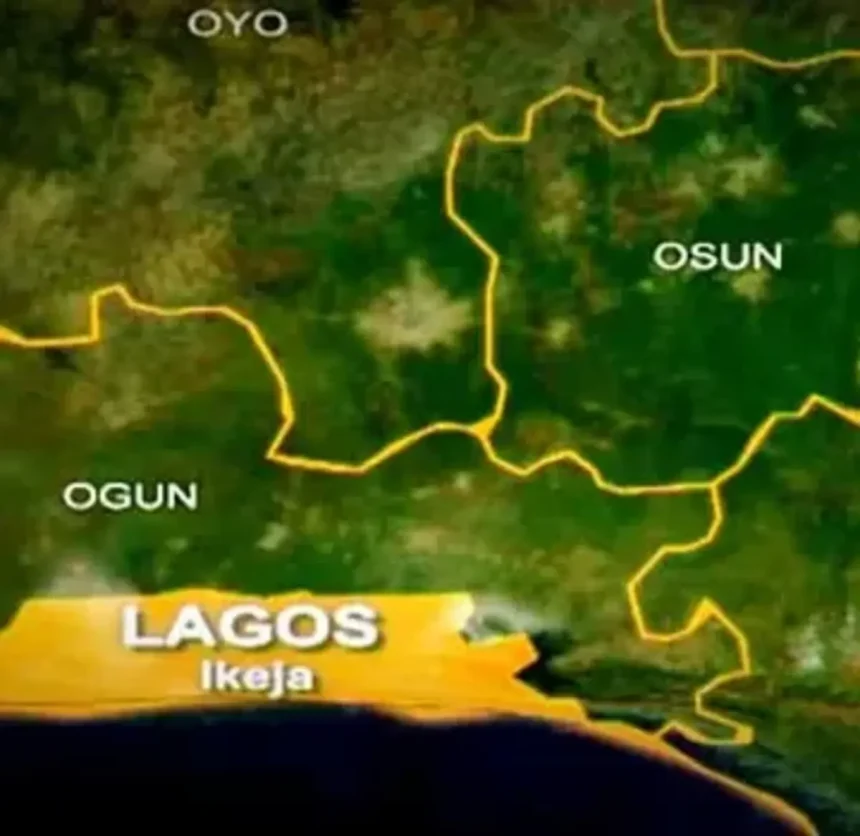
Every day, on my way back from work, the first thing that tells me I am close to home is the smell of the open waste truck that goes round the community collecting refuse. It arrives before the truck is even in sight and lingers long after it has turned the corner. Having spent more than a decade of my life in Epe, Lagos, Nigeria, I learned to recognise it the way you learn to recognise rain before it falls: a shift in the air, a stillness that makes you hold your breath without deciding to. Trucks pass close to homes, farms, and stalls where women sell food by the roadside. Nobody stops what they are doing. Life in Lagos does not pause for the smell. It has simply become part of the air we breathe.
For a long time, I thought of this as an inconvenience; something unpleasant but ultimately harmless, the kind of thing you complain about and then forget. It was a conversation with a friend of mine, a nutritionist, that changed how I saw it. She pointed out the long-term harm that this “open waste transportation” could be causing to the very community it serves. The conversation pushed me to look more deeply, which is why this piece exists. The uncomfortable truth is that what passes through Epe’s streets in those open trucks is not just waste in transit, but exposure distributed across an entire community, one uncovered vehicle at a time.
To understand why this keeps happening, it helps to understand why waste management struggles to keep up in the first place. As populations grow and towns like Epe expand, the volume of waste generated grows with them, while the infrastructure meant to collect, sort, and transport that waste often does not grow at the same pace. Waste management is not a single act of disposal; it is a chain that runs from generation, to storage, to collection, to transportation, and finally to treatment or disposal, and a weakness at any point in that chain shows up as a burden somewhere else. In Epe’s case, that weakness shows up most visibly in the collection and transportation stage, where waste from homes, markets, and construction sites is gathered without separation and carried through town in vehicles with no covering at all.
As we researched this, we realise that not only is the air affected, but liquid leachate also trails out of the waste as the trucks pass, pouring onto the road and leaving the smell behind for longer, and worse, for everyone nearby, who are left to inhale it for the rest of the day and often into the next, until the truck comes round again. One question remains unanswered: when do these communities get to breathe good air?
Epe in Lagos is home to a municipal dumpsite that opened in February 2009, spread across roughly 80 hectares on the northern edge of the Lagos Lagoon, a short distance from Epe town and barely a kilometre from the Epe Lagoon itself.
The site takes in everything: domestic waste, industrial waste, organic matter, construction debris, etc., all of it collected and transported without separation, often in uncovered vehicles from one end of town to the other. Nearby are low-income settlements like Afero, as well as farmlands that feed the wider community. Proximity to this dumpsite will doubtless pose a serious health hazard to local communities; research has shown this.
Researchers have long identified open dumpsites and the vehicles that feed them as a major source of the air that surrounding communities are forced to inhale. Waste transported in open vehicles releases carbon monoxide, nitrogen oxides, particulate matter, and other pollutants directly into the air of the neighbourhoods it passes through, worsening respiratory conditions and degrading air quality for people who have no say in the route the truck takes. In cities across the developing world, this pattern repeats: informal transportation, open dumping, and uncontained waste handling are among the most persistent and under-addressed sources of urban air pollution.
The health consequences are not abstract either. Exposure to hazardous waste has been linked to a wide range of adverse health outcomes, and children in particular face greater vulnerability because of how their bodies process environmental exposure. Studies examining the link between waste and health have found that waste from households, agriculture, and industry alike can pose serious risks when not properly managed. Communities living near disposal sites and along waste transport routes have reported problems affecting the respiratory system, irritation of the skin, eyes, and nose, gastrointestinal issues, psychological strain, and allergic reactions. These are not isolated complaints; they are patterns that repeat wherever waste is handled the way it is in Epe.
One of the routes this harm travels is water. Waste that is not properly contained produces leachate, a liquid that seeps from decomposing refuse and, where drainage and containment are weak, enters groundwater and surface water. Case studies from cities in southern Nigeria have documented exactly this pattern near refuse dumpsites, with contaminated groundwater posing measurable risk to nearby households. Given how close Epe’s dumpsite is to the Lagos Lagoon and to farmlands that feed the community, this is not a distant hypothetical; it is a risk to be a few hundred metres from where people draw water and grow food. Contaminated water of this kind raises the risk of cholera, typhoid, and diarrheal disease for anyone who depends on it, whether they know the water has been compromised or not.
There is also the matter of what exposed waste attracts. Refuse left in the open, or spilling from uncovered trucks as they move through town, creates ideal breeding conditions for mosquitoes, flies, and rodents – with them comes the risk of vector-borne disease. In a community already vulnerable to malaria, creating more opportunities for mosquito breeding isn’t a minor side effect; it compounds the public health burden Epe already carries.
There is also a version of this harm that hides in something as ordinary as a meal. Much of Epe’s food economy lives on the street: rice, noodles, bean cakes, roasted corn, suya, roasted plantain, and fish are sold uncovered by vendors who depend on that visibility to make a living. People buy this food because it is cheap and accessible, and the harsh economic situation does not afford them the luxury of questioning the environment in which the food was prepared. When waste moves through the same streets, uncovered, particles travel and settle onto the food families eventually eat, increasing the risk of foodborne illnesses that can follow from that kind of contamination.
This problem is not unique to Epe. Global municipal solid waste generation stood at an estimated 2.01 billion tonnes in 2016 and is projected to rise to 3.4 billion tonnes by 2050 if current patterns of production and management remain unchanged. As the World Bank has noted, waste management affects far more than sanitation alone; it shapes environmental health, the wellbeing of vulnerable populations, and even the relationship between citizens and the governments meant to serve them. Epe carries out annual rehabilitation work at its dumpsite, but population growth and the persistence of uncovered waste transportation vehicles mean the effort rarely catches up with the scale of what needs managing. The tension is the same one that runs through much of Nigeria’s public health story: nothing is being done; what is being done cannot keep pace with what is required.
What would it look like to manage this differently? A well-implemented waste management system not only removes refuse from sight; it also minimises the noise, odours, toxic gases, and pollutants that come with poor handling, protecting the people who live nearest to the process. Improving collection and transportation services is not a cosmetic fix; it is a direct route to reducing pollution, easing the health burden on nearby communities, and even relieving the everyday congestion that comes with poorly managed collection routes. None of this requires reinventing waste management from scratch. It requires covered vehicles, well-maintained routes, and a system funded to match the volume it actually carries.
Until waste transportation in places like Epe is treated as seriously as the disposal it precedes, until trucks are covered, routes reconsidered, and systems funded to match the volume they are meant to carry, the people living along these roads will keep absorbing a cost that was never really theirs to bear.
Ibechone Onubi is a researcher, and Simon Patrick Obi is a Blazer Fellow at the University of Alabama at Birmingham








